
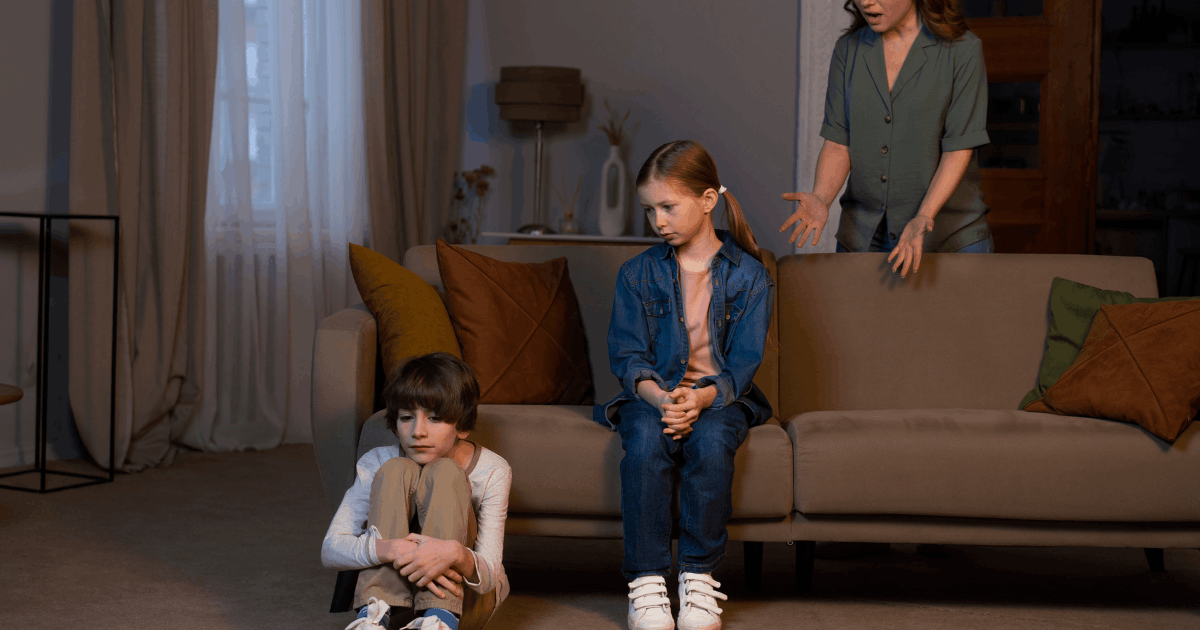
Social Anxiety in Kids: Identifying Signs and Practical Support Guide
Social anxiety in kids is a clinical condition involving a persistent, disproportionate fear of being scrutinized or negatively judged in social or performance situations. Symptoms of social anxiety in kids frequently manifest as behavioral inhibition, school refusal, and somatic physical complaints like stomachaches or nausea prior to interpersonal interactions—often appearing as early as age four and accelerating during key developmental transitions such as school entry and grade changes.
Key Clinical Symptoms: What Parents Should Notice
Young children lack the emotional vocabulary to articulate anxiety. A seven-year-old will not say “I experience social-evaluative threat.” Instead, the disorder communicates through the body and through behavior—and parents who know what to look for can identify the pattern months or years before it would otherwise reach clinical attention.
Symptoms divide into two observable categories: behavioral signs and physical signs. Both must be present and persistent to suggest clinical significance.
Behavioral signs.
Consistent refusal to speak in settings outside the home—or speaking only in a whisper—when the child communicates normally with family members. This pattern, when severe, may meet criteria for selective mutism, a condition closely related to SAD. Avoidance of age-appropriate social activities: declining birthday party invitations, refusing to join playground groups, resisting participation in classroom activities that involve being watched or called upon. Excessive clinging to a parent or caregiver in social settings, beyond what is developmentally expected for the child’s age. Crying, freezing, or tantrum behavior immediately before or upon arrival at social situations—not as willful defiance, but as an involuntary distress response. Reluctance or refusal to initiate interaction with other children, even when the child clearly desires connection. Withdrawal from activities the child previously enjoyed once a social-evaluative component is introduced (for example, enjoying soccer at home but refusing to attend team practice).
Physical signs.
Recurring stomachaches, nausea, or vomiting on school mornings or before social events—symptoms that resolve once the social obligation is removed. Headaches without medical explanation that follow a pattern tied to social exposure. Visible blushing, trembling, or sweating when addressed by unfamiliar adults or peers. Complaints of a racing heart or “feeling funny” in situations requiring social performance. Sleep disturbance—difficulty falling asleep on nights before socially demanding days, or nightmares with social content.
These physical symptoms are not fabricated. They are genuine somatic expressions of sympathetic nervous system activation. When a child’s amygdala registers social threat, the body responds with the same cascade of cortisol and adrenaline that would accompany a physical danger. The stomachache is real. The nausea is real. Dismissing these complaints as attempts to avoid school reinforces the child’s sense that their distress is illegitimate and delays identification of the underlying condition.
For a comprehensive overview of how these symptoms present across childhood and adolescence, see our guide to SAD signs and support.
Is It Shyness or Clinical SAD?
Every parent of a quiet child asks this question, and the answer has significant implications for whether intervention is needed. Shyness and Social Anxiety Disorder occupy different positions on a shared continuum, and the clinical literature provides clear markers for distinguishing between them.
Shyness is a temperamental trait characterized by initial wariness in unfamiliar social situations. A shy child may hesitate before joining a group, take longer to warm up to new people, or prefer familiar environments. The defining feature of shyness is that it resolves with exposure: given time and gentle encouragement, the shy child engages, participates, and ultimately functions without significant distress. Shyness does not prevent the child from attending school, forming friendships, or meeting developmental milestones. It is a variation in temperament, not a pathology.
Social Anxiety Disorder, as defined by the DSM-5 diagnostic criteria, requires the following elements to be present simultaneously: a marked and persistent fear or anxiety about social situations in which the child is exposed to possible scrutiny. In children, this must occur in peer settings, not only with adults. The fear is disproportionate to the actual threat posed by the social situation. The social situations are consistently avoided or endured with intense distress. The pattern persists for six months or more. The anxiety causes clinically significant impairment in social, academic, or other important areas of functioning. The disturbance is not better explained by another condition and is not attributable to a substance or medical condition.
The practical distinction for parents. Shyness bends with time and support. Clinical SAD does not. If your child’s social reluctance has remained stable or worsened over six months, if it has begun to restrict daily life (school attendance, peer relationships, family routines), and if the child’s distress is clearly disproportionate to the social demands they face, the pattern has moved beyond temperamental variation into clinical territory.
A critical nuance for young children: the DSM-5 notes that children with SAD may express their anxiety through crying, tantrums, freezing, clinging, shrinking, or failing to speak in social situations. These are not behavioral problems—they are anxiety symptoms expressed through the only channels available to a child who cannot yet articulate internal states.
Screen Your Child for Anxiety Today
Parental intuition is valuable but insufficient for clinical decision-making. What transforms concern into actionable data is structured measurement—a tool that converts subjective observation into a quantified severity profile that clinicians can interpret, track, and use to guide treatment.
If you notice persistent distress in your child during social transitions, objective measurement is required. Use our standardized Social Anxiety Test to establish a baseline for clinical consultation.
Why screening matters at this stage.
Early screening accomplishes three things simultaneously. First, it confirms or disconfirms your concern with structured data rather than speculation. Many parents worry unnecessarily, and a low screening score provides reassurance grounded in evidence rather than hope. Second, if the screening indicates elevated social anxiety, it gives you a documented baseline that your child’s pediatrician or a child psychologist can use to expedite the diagnostic process. Clinicians move faster and with greater confidence when parents present structured data alongside their observations. Third, repeated screening over time produces a longitudinal record. Whether symptoms are improving, stable, or escalating becomes measurable—not a matter of memory or impression.
What screening does not do. No screening tool—online or clinical—diagnoses Social Anxiety Disorder. Diagnosis requires a comprehensive evaluation by a licensed mental health professional who can assess the child’s developmental history, rule out alternative explanations, and apply the full DSM-5 diagnostic framework. Screening identifies children who warrant that evaluation. It is the bridge between “I think something is wrong” and “Here is the clinical evidence that supports a formal assessment.”
Long-Term Impact on Social Development
Untreated social anxiety in early childhood does not resolve on its own. Longitudinal research consistently demonstrates that SAD in young children, when unaddressed, follows a trajectory of progressive restriction—narrowing the child’s social world incrementally until the developmental consequences become difficult to reverse.
Social skill deficits compound over time. Social competence is built through practice. Children learn conversation skills, conflict resolution, cooperative play, empathy, and social reciprocity by engaging with peers repeatedly across thousands of interactions between ages four and twelve. A child who avoids these interactions does not merely miss the experience—they miss the developmental window in which these skills are most naturally acquired. By adolescence, the socially anxious child may be years behind peers in interpersonal fluency, creating a secondary source of anxiety: they now fear social situations not only because of evaluation apprehension but because they genuinely lack the skills to navigate them effectively.
Academic trajectory narrows. Classroom participation, group projects, oral presentations, and teacher-student interaction are not extracurricular—they are core components of academic assessment. A child who cannot participate verbally, collaborate with peers, or engage with instructors is at a measurable academic disadvantage regardless of intellectual ability. Over years, this disadvantage accumulates into lower grades, reduced access to advanced coursework, and diminished confidence in academic identity.
Comorbid conditions emerge. SAD in childhood is a well-established risk factor for the development of secondary conditions in adolescence and adulthood. Depression is the most common comorbidity, often emerging as the child internalizes the social limitations their anxiety has imposed. Generalized anxiety, avoidance-based behavioral patterns, and in some cases substance use (as a self-medication strategy in adolescence) are documented downstream consequences of untreated childhood SAD.
Identity formation is affected. Between ages six and twelve, children develop their self-concept—their understanding of who they are in relation to the social world. A child whose primary social experience is fear, avoidance, and perceived inadequacy incorporates those experiences into their emerging identity. “I am someone who cannot handle social situations” becomes a core belief, not merely an anxious thought—and core beliefs are substantially more resistant to change than situational cognitions.
The research is unambiguous: early intervention produces significantly better outcomes than delayed intervention. Treating SAD at age six is clinically easier, faster, and more effective than treating the same disorder at age sixteen, when a decade of avoidance, skill deficits, and negative self-concept has consolidated the condition.
How Licensed Therapists Treat Anxiety in Early Childhood
Evidence-based treatment for childhood SAD follows a developmental adaptation of the same principles that guide adult interventions—modified for children’s cognitive capacity, emotional vocabulary, and dependence on the family system.
Cognitive-Behavioral Therapy (CBT) — child-adapted protocols. CBT is the most extensively researched and empirically supported treatment for childhood social anxiety. Child-adapted CBT uses age-appropriate language, visual aids, games, and narrative techniques to teach the same core skills as adult CBT: identifying anxious thoughts, evaluating their accuracy, and gradually confronting feared situations through structured exposure. Programs such as the Coping Cat protocol (developed by Philip Kendall) and the FRIENDS program have demonstrated significant symptom reduction in randomized controlled trials with children as young as seven.
A key component of child CBT is graded exposure. The therapist and child collaboratively build a “fear ladder”—a hierarchy of social situations ranked from least to most anxiety-provoking. The child works through the ladder incrementally, experiencing each step with therapeutic support until the anxiety response diminishes. For a child with SAD, early rungs might include making eye contact with a store clerk or answering a question in a small group; later rungs might involve initiating a conversation with an unfamiliar peer or giving a short presentation to the class.
Parent-involved therapy. For children under ten, parental involvement in treatment is not optional—it is a predictor of outcome. Parents learn to recognize accommodation behaviors (actions they take to reduce the child’s anxiety that inadvertently reinforce avoidance), practice supportive coaching during exposure exercises, and modify family routines that may be maintaining the anxiety cycle. Parent-involved models teach caregivers grounding techniques they can guide their child through during moments of acute distress—providing immediate physiological regulation without resorting to avoidance.
Play therapy and creative modalities. For very young children (ages four to six) whose cognitive development does not yet support the structured reasoning required by CBT, play-based therapeutic approaches provide an entry point. Through play, children externalize fears they cannot verbalize, practice social scenarios in a safe environment, and develop emotional regulation skills with therapist guidance. Play therapy is typically a precursor or complement to CBT rather than a standalone treatment for SAD.
Pharmacological considerations. Medication is not a first-line treatment for childhood SAD. Clinical guidelines from the American Academy of Child and Adolescent Psychiatry (AACAP) recommend CBT as the initial intervention, with pharmacotherapy considered only when therapy alone produces an inadequate response or when the severity of symptoms prevents the child from engaging in therapeutic work. When medication is indicated, selective serotonin reuptake inhibitors (SSRIs) are the most commonly prescribed class, with the strongest evidence base in pediatric anxiety. For a balanced overview of when and how medication fits into a treatment plan, see our guide to anxiety medication. Any pharmacological intervention in children should be closely monitored by a child psychiatrist, with regular reassessment of efficacy and side effects.
The integration model. The most effective treatment plans for childhood SAD combine multiple elements: child-focused CBT for skill-building and exposure, parent training for family-system support, school consultation for environmental accommodation, and—when clinically warranted—pharmacotherapy for symptom stabilization. No single modality addresses all dimensions of the disorder. The therapist’s role is to coordinate these components into a coherent plan that meets the specific child’s developmental level, symptom profile, and family context.
Trusted Resources
The following organizations provide evidence-based guidance on childhood anxiety, early identification, and family-centered intervention:
- National Institute of Mental Health (NIMH) — Anxiety Disorders in Children — Federal research on childhood anxiety prevalence, neurodevelopmental mechanisms, and treatment evidence.
- Child Mind Institute — Anxiety in Young Children — Expert-authored parent guides, school-based intervention resources, and clinician-reviewed educational materials.
- American Academy of Child and Adolescent Psychiatry (AACAP) — Facts for Families: Anxiety — Plain-language clinical fact sheets written by child psychiatrists covering identification, diagnosis, and treatment.
- Anxiety and Depression Association of America (ADAA) — Childhood Anxiety — Screening guidance, family resources, and a clinician directory filtered by pediatric anxiety specialization.
- Zero to Three — Social-Emotional Development — Research and resources on emotional development in infants and toddlers, including early indicators of anxiety-related temperament.
This article is for educational purposes only and does not constitute clinical advice. Screening tools are not diagnostic instruments. If you believe your child may have Social Anxiety Disorder, consult a licensed child mental health professional for a comprehensive developmental and diagnostic evaluation.
{ “@context”: “https://schema.org”, “@type”: “MedicalWebPage”, “headline”: “Understanding and Managing Social Anxiety in Kids: A Clinical Guide for Parents”, “description”: “Comprehensive resource on identifying symptoms of Social Anxiety Disorder in children and the path to effective therapeutic intervention.”, “medicalAudience”: “Parent”, “specialty”: “Pediatric Psychiatry”, “mainEntity”: { “@type”: “MedicalTest”, “name”: “Pediatric Social Anxiety Assessment”, “url”: “https://socialanxiety.co/social-anxiety-test/” } }