Social Anxiety Test Teenager: Recognizing Signs in Adolescence
Social anxiety test teenager assessments are diagnostic screening tools designed to identify clinical social-evaluative threat during the critical developmental window of adolescence. Because social phobia in this age group often centers on academic performance and peer group hierarchy, a specialized social anxiety test teenager guide focuses on school-based markers and physiological symptoms triggered during social transitions in high school—where early identification can prevent consolidation into a chronic adult disorder.
How Social Anxiety Manifests Specifically in Teens
Social Anxiety Disorder does not present identically across all age groups. Adolescent SAD operates within a developmental context that makes it both distinctly recognizable and frequently misidentified. The social demands of secondary school create a daily environment saturated with the exact conditions that activate social-evaluative threat: public performance, peer hierarchy, group inclusion and exclusion, physical self-consciousness, and authority evaluation.
Understanding how SAD specifically manifests in teenagers—as opposed to younger children or adults—is essential for accurate identification.
School refusal and academic avoidance. When a teenager begins resisting school attendance, the cause is rarely laziness. In adolescents with SAD, school refusal is driven by anticipatory dread of specific social exposures: being called on in class, eating in the cafeteria, navigating hallway interactions, participating in group projects, or changing for physical education in shared spaces. The refusal often appears gradually—starting with complaints of illness on days with presentations or tests, progressing to frequent absences, and in severe cases, culminating in complete withdrawal from the school environment. Academic grades decline not because of intellectual limitation but because participation, attendance, and collaborative work—all socially loaded tasks—become impossible.
Fear of evaluation by peers. Adult SAD typically involves fear of negative evaluation across social contexts. Adolescent SAD is more narrowly and intensely focused on peer evaluation. The developmental primacy of peer acceptance during ages 13 to 19 means that perceived social failure carries existential weight in a way it does not for most adults. A teenager with SAD does not simply worry about embarrassment—they anticipate social annihilation: permanent exclusion from a peer group, being labeled as “weird” or “awkward,” or becoming the target of ridicule. This fear is not proportional to actual social risk, but it is proportional to the developmental stakes the adolescent brain assigns to peer belonging.
Physical symptoms misread as medical problems. Adolescents with SAD frequently present to pediatricians and school nurses with somatic complaints: recurring stomachaches, headaches, nausea, dizziness, chest tightness, and fatigue. These physical and cognitive symptoms are genuine physiological responses to sympathetic nervous system activation, but because they appear without an obvious “emotional” trigger, they are often investigated as gastrointestinal, neurological, or cardiac issues. Multiple negative medical workups in a teenager who reports symptoms primarily on school days or before social events should raise clinical suspicion for an anxiety disorder.
Silence mistaken for defiance or disengagement. A socially anxious teenager who does not speak in class, does not participate in group discussions, and does not volunteer answers is frequently coded by teachers as disengaged, unmotivated, or oppositional. The internal reality is the opposite: the teenager is intensely focused on the social environment, hypervigilant to potential evaluation, and actively suppressing verbal output to avoid the risk of negative judgment. This misinterpretation delays identification and, in some cases, results in disciplinary responses that compound the anxiety.
Not every quiet or reluctant teenager has Social Anxiety Disorder. The distinction between temperamental reserve and clinical pathology is well-documented, and our guide to shyness vs. social anxiety provides a detailed framework for differentiating the two. The critical marker is impairment: when the behavior prevents the adolescent from functioning in academic, social, or family contexts, the threshold for clinical concern has been crossed.
The Standardized Social Anxiety Test for Adolescents
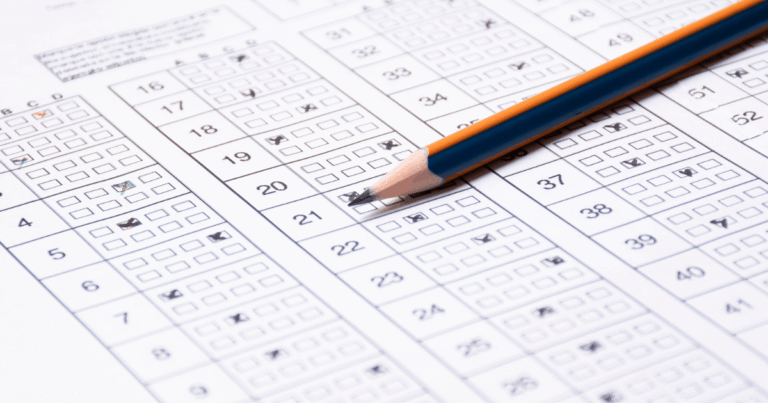
Clinical screening for adolescent SAD uses instruments specifically validated for the 13-to-19 age range. Adult measures—such as the Liebowitz Social Anxiety Scale (LSAS)—capture symptom dimensions that do not fully map onto the adolescent experience. Effective adolescent screening must account for the school environment as the primary social arena, peer evaluation as the dominant threat, and developmental variability in emotional vocabulary and self-awareness.
The most widely used validated instruments for adolescent social anxiety include:
Social Phobia and Anxiety Inventory for Children (SPAI-C). Designed for ages 8 to 17, the SPAI-C assesses cognitive, somatic, and behavioral dimensions of social anxiety across contexts that are specific to young people—classroom performance, interactions with same-age peers, encounters with authority figures, and participation in group activities. Its three-factor structure (assertiveness, general conversation, and physical and cognitive symptoms) provides clinicians with a dimensional severity profile rather than a binary diagnosis.
Screen for Child Anxiety Related Disorders (SCARED). The SCARED includes a social anxiety subscale and is available in both child-report and parent-report versions, allowing clinicians to compare the adolescent’s self-assessment against parental observation. Discrepancies between the two reports are clinically informative: adolescents with SAD frequently underreport avoidance behaviors they have normalized, while parents may overreport or underreport depending on their own awareness of the condition.
Social Anxiety Scale for Adolescents (SAS-A). The SAS-A measures three dimensions particularly relevant to teenage SAD: fear of negative evaluation, social avoidance and distress in new situations, and social avoidance and distress in general situations. Its language and scenario framing are calibrated to the social world of secondary school students, making it more ecologically valid for this population than adapted adult instruments.
Screening for Recovery: If you are between ages 13–19 or a concerned parent, take our clinically reviewed Social Anxiety Test to understand your symptom severity.
Screening results from any instrument—including online tools—should be interpreted as indicators, not diagnoses. A score above the clinical threshold signals that a formal evaluation by a licensed mental health professional is warranted. A score below the threshold does not rule out SAD entirely, particularly in adolescents who minimize symptoms due to shame, lack of insight, or fear of the evaluation process itself.
For parents and educators seeking a broader understanding of how social anxiety presents across the adolescent years, our comprehensive guide to social anxiety in teens covers identification, communication strategies, and intervention pathways in detail.
Common Triggers: Class Presentations, Cafeterias, and Social Media
Adolescent social anxiety is not a generalized state of discomfort. It activates in response to specific environmental triggers—situations that combine social exposure, evaluative potential, and limited escape routes. Identifying these triggers helps parents, educators, and clinicians understand the functional architecture of the disorder in a teenager’s daily life.
Oral presentations and classroom participation. The single most frequently reported trigger for adolescent SAD is being required to speak in front of classmates. Oral presentations combine every element of social-evaluative threat: the teenager is the sole focus of attention, performance is being judged, the audience consists of peers whose opinion carries developmental weight, and the situation cannot be escaped without visible social consequence. Many adolescents with SAD report that the anticipatory dread—which can begin days before a scheduled presentation—is more distressing than the event itself. Some develop elaborate avoidance strategies: feigning illness on presentation days, submitting written alternatives, or accepting grade penalties rather than performing publicly.
Cafeterias, common areas, and unstructured social time. Structured academic settings provide a script: the teacher directs activity, roles are defined, and social interaction follows predictable patterns. Unstructured environments—lunch periods, free periods, transitions between classes—remove the script entirely. The adolescent must navigate seating decisions (visible markers of social belonging), initiate or join conversations without institutional prompting, and manage the ambiguity of peer dynamics in real time. For teenagers with SAD, the cafeteria is not a break from academic stress—it is the most socially demanding and least controllable environment in the school day.
Social media and digital social evaluation. Contemporary adolescent SAD cannot be understood without accounting for the role of digital platforms. Social media extends the social-evaluative environment beyond school hours and physical spaces into a continuous, quantifiable system of peer feedback. Likes, comments, follower counts, story views, and public interactions create a measurable hierarchy that adolescents with SAD monitor with the same hypervigilance they apply to in-person social cues. The unique burden of social media for anxious teenagers includes the permanence of digital social errors (a post cannot be “unsaid” the way a spoken comment might be forgotten), the public visibility of social metrics (follower counts and engagement rates are observable markers of social standing), and the performative pressure to maintain an idealized social persona across platforms.
Extracurricular activities and social transitions. Starting a new school, joining a sports team, attending a camp, or entering any social group where the teenager lacks established relationships and must build status from zero activates the full SAD response cycle. These transitions are developmentally normal and expected—but for an adolescent with SAD, each represents a high-stakes social evaluation with no guarantee of acceptance.
Helping Your Teen Navigate Clinical Recovery
Recovery from adolescent SAD is not a single intervention. It is a coordinated process involving clinical treatment, environmental support, and gradual, sustained behavioral change.
Step 1: Validate, do not dismiss. The most damaging parental response to adolescent social anxiety is minimization: “You are overthinking it,” “Everyone gets nervous,” “Just push through it.” These responses, however well-intentioned, communicate that the teenager’s distress is illegitimate and that they should be able to resolve it through willpower alone. Neither is true. Social Anxiety Disorder involves measurable neurobiological processes—amygdala hyperactivation, disrupted prefrontal regulation, elevated cortisol—that cannot be overridden by effort. Validation does not mean agreeing that the feared outcome is likely; it means acknowledging that the fear itself is real, painful, and deserving of attention.
Step 2: Pursue formal screening and evaluation. Parental observation is the starting point, not the endpoint. A structured screening instrument provides the clinical data that moves the conversation from “I think something is wrong” to “Here is the measurable pattern we need to address.” Share screening results with your teenager’s pediatrician or a licensed child and adolescent psychologist to initiate a formal diagnostic evaluation.
Step 3: Engage evidence-based treatment. The gold-standard intervention for adolescent SAD is CBT for anxiety, which has the strongest evidence base for this population across multiple randomized controlled trials. Adolescent-adapted CBT protocols typically include psychoeducation (helping the teenager understand the cognitive model of anxiety), cognitive restructuring (identifying and modifying distorted beliefs about peer evaluation), and graded exposure (systematic, supported confrontation of feared social situations, beginning with low-threat scenarios and progressing incrementally). Family-involved CBT—where parents participate in selected sessions to learn how to support exposure work at home—has demonstrated enhanced outcomes compared to individual CBT alone.
Step 4: Coordinate with the school environment. Academic accommodations can reduce unnecessary social-evaluative burden while the teenager is actively in treatment. Reasonable accommodations may include alternative presentation formats (recorded rather than live, small-group rather than full-class), preferential seating that reduces the feeling of being observed, written participation options for class discussion components, and graduated re-entry plans for students returning from extended absence. These adjustments are not avoidance—they are structured modifications that keep the teenager engaged in the educational environment while treatment builds the capacity for fuller participation.
Step 5: Plan for the next transition. Adolescent SAD does not end at graduation. The transition from secondary school to university, vocational training, or the workforce introduces a new set of social demands. Students entering higher education face dormitory living, lecture halls, seminar participation, and unstructured social environments that reproduce many of the same triggers present in high school—often at greater intensity and with less institutional support. Our guide to support at university addresses the specific challenges of this transition and the resources available to students managing SAD in higher education settings.
Recovery is not the absence of anxiety. It is the ability to experience anxiety without being controlled by it—to feel the discomfort and engage anyway, not because the fear has disappeared, but because the teenager has developed the clinical tools and lived experience to manage it effectively.
Trusted Resources
The following organizations provide evidence-based information on adolescent mental health, social anxiety screening, and youth-specific intervention:
- National Institute of Mental Health (NIMH) — Social Anxiety Disorder in Children and Teens — Federal research on prevalence, developmental trajectory, and treatment efficacy in young populations.
- Child Mind Institute — Social Anxiety in Adolescents — Expert-authored articles, parent guides, and school-based intervention resources for teenage anxiety.
- American Academy of Child and Adolescent Psychiatry (AACAP) — Anxiety Disorders Resource Center — Clinical fact sheets and treatment guidelines specific to child and adolescent populations.
- Anxiety and Depression Association of America (ADAA) — Anxiety in Teens — Screening guidance, clinician directories, and family-facing educational content.
- National Alliance on Mental Illness (NAMI) — Teen and Young Adult Resources — Peer support networks, advocacy tools, and crisis resources tailored to adolescents and emerging adults.
This article is for educational purposes only and does not constitute clinical advice. Social anxiety screening tools are not diagnostic instruments. If you believe your teenager may have Social Anxiety Disorder, consult a licensed child and adolescent mental health professional for a comprehensive evaluation.