
Beta Blockers for Social Anxiety: Pharmacology, Clinical Applications, and the Symptom Gap
Summary
Beta Blockers for Social Anxiety are beta-adrenergic antagonists utilized clinically to inhibit the physiological manifestations of the stress response, such as tachycardia and tremor (DSM-5-TR 300.23). By competitively binding to beta receptors, these agents prevent catecholamines from activating the peripheral nervous system. Institutional research highlights their specific efficacy in treating the “performance-only” specifier of Social Anxiety Disorder within the ICD-11 framework.
Understanding Beta Blockers in the Context of Social Anxiety
Beta-adrenergic antagonists — commonly referred to as beta blockers — occupy a distinctive and precisely defined role in the pharmacological management of social anxiety disorder. Unlike the serotonin reuptake inhibitors that constitute first-line psychiatric pharmacotherapy for SAD, or the benzodiazepines that produce broad central nervous system sedation, beta blockers act peripherally and specifically on the autonomic nervous system’s somatic expression of the fear response. They do not alter mood, reduce cognitive anxiety, or modify the neural threat-processing circuitry that generates social fear. What they do — with considerable precision and a well-established safety profile — is interrupt the peripheral cascade of physical symptoms that both signal anxiety to observers and amplify it neurobiologically in the individual experiencing it.
This specificity is simultaneously the primary clinical strength of beta blockers and the primary limitation that defines appropriate versus inappropriate use. Understanding both requires examining the autonomic neurobiology they target and the mechanism by which they act.
The Autonomic Nervous System and the Peripheral Anxiety Response
The Sympathetic Cascade in Social Threat
When an individual with social anxiety disorder enters a social evaluation context — a presentation, a performance, a formal interview, a high-stakes interaction — the brain’s threat appraisal system generates a response proportionate to the perceived danger. In SAD, this appraisal system is hyperreactive: situations that most individuals would experience as mildly stressful or unremarkable are processed as severe threats to social survival, activating the full sympathetic stress response at corresponding intensity.
The hypothalamic-pituitary-adrenal axis and the sympathetic nervous system activate in parallel. The adrenal medulla releases epinephrine and norepinephrine into systemic circulation. These catecholamines bind to beta-adrenergic receptors distributed throughout cardiac tissue, smooth muscle, and the peripheral vasculature, initiating a coordinated physiological preparation for threat response. The consequences are immediate and clinically familiar: heart rate accelerates, sometimes to 120 to 140 beats per minute in severe cases; blood pressure rises; peripheral blood flow redistributes; fine motor control deteriorates producing visible tremor; sweating increases in the palms, axillae, and forehead; and respiratory rate increases with characteristic chest tightness.
In an evolutionary context, this response is adaptive — it prepares the organism for physical action in the face of genuine threat. In the social performance context, it is functionally catastrophic. The trembling hand cannot write cleanly or hold a bow steadily. The quavering voice undermines the content of every sentence it delivers. The visible sweating and flushing communicate the very anxiety the individual is attempting to conceal. The full physical profile of the anxiety response is documented in the social anxiety symptoms reference.
The Peripheral Feedback Loop
The clinical significance of these peripheral symptoms extends beyond their direct functional interference. Neuroimaging research has established that the insula — the cortical region mediating interoceptive awareness, the perception of internal bodily states — demonstrates heightened activation and sensitivity in social anxiety disorder. Individuals with SAD are acutely attuned to changes in their own heart rate, respiratory pattern, and autonomic arousal in ways that most people are not. Internal bodily signals that would pass below the threshold of conscious awareness in non-anxious individuals are registered, interpreted, and incorporated into ongoing threat appraisal.
The clinical consequence is a peripheral feedback loop in which the body’s response to perceived social threat becomes itself a threat signal. The racing heart is interpreted as evidence of impending loss of control. The visible tremor is interpreted as confirmation that observers will perceive the individual’s anxiety and judge them accordingly. This catastrophic interpretation amplifies the threat signal centrally, which intensifies sympathetic activation, which worsens the physical symptoms, which provides further evidence for catastrophic interpretation. The loop escalates in a self-reinforcing cycle that can reach panic-level intensity without any change in the external situation.
A related manifestation of this heightened physiological state is the freeze response — a brief arrest of cognitive and behavioral function under acute threat load, documented in contexts of intense social scrutiny. The neurophysiology of gaze-triggered freeze responses in social anxiety is examined in detail at socialanxiety.co/eye-contact.
Mechanism of Action: How Beta Blockers Interrupt the Cascade
Beta-Adrenergic Receptor Pharmacology
Beta-adrenergic receptors are G-protein coupled receptors distributed throughout multiple organ systems. Three receptor subtypes are pharmacologically relevant. Beta-1 receptors are located predominantly in cardiac tissue, where their activation by catecholamines increases heart rate, myocardial contractile force, and the velocity of electrical conduction through the atrioventricular node. Beta-2 receptors are located in smooth muscle of the bronchial tree, peripheral vasculature, uterus, and skeletal muscle, where their activation mediates bronchodilation and vascular effects. Beta-3 receptors, located primarily in adipose tissue, have minimal relevance to anxiety pharmacology.
Beta blockers act as competitive antagonists at these receptors — they bind to the receptor site with affinity comparable to or exceeding that of the endogenous catecholamines, occupying the binding site without activating the downstream signaling cascade and thereby preventing epinephrine and norepinephrine from exerting their effects. The block is competitive rather than insurmountable: at sufficiently high catecholamine concentrations, such as those generated by intense physical exercise or extreme stress, epinephrine can overcome the antagonism and partially activate the receptor. At the concentrations produced by social evaluation stress, however, competitive blockade at therapeutic doses is clinically effective.
Cardiovascular Effects
The therapeutically primary effect of beta-1 blockade for social anxiety is the attenuation of heart rate acceleration. Continuous heart rate monitoring studies demonstrate that propranolol at typical anxiolytic doses reduces resting heart rate by approximately 10 to 15 beats per minute and substantially blunts the tachycardic response to psychological stress. An individual whose heart rate would typically increase from 70 to 130 beats per minute during public speaking may experience an increase only to the 85 to 95 range under propranolol. The cardiac output required for normal physical functioning is maintained through compensatory increases in stroke volume; it is specifically the tachycardia and the subjective pounding quality of the cardiac response that are attenuated.
This cardiovascular attenuation serves two distinct clinical functions: it reduces the direct functional interference of tachycardia with performance, and it removes the primary interoceptive signal that feeds the peripheral feedback loop described above. When the heart does not pound, the individual has less bodily evidence to interpret catastrophically, and the self-amplifying anxiety cycle is interrupted at a key link.
Peripheral Beta-2 Effects
Beta-2 receptor antagonism contributes additionally to the clinical profile of non-selective beta blockers. Tremor reduction is among the most consistently observed effects: both essential tremor and anxiety-induced tremor involve beta-2 mediated neuromuscular activity, and propranolol’s anti-tremor efficacy is sufficiently established that it carries a formal indication for essential tremor independent of its off-label use for anxiety. For musicians, surgeons, and others whose performance depends critically on fine motor stability, this represents a direct functional benefit.
Beta-2 blockade in the peripheral vasculature attenuates the cold, clammy extremity sensation that many individuals experience during social anxiety episodes. The clinical limitation of peripheral beta-2 blockade lies in the bronchial tree: antagonism of beta-2 receptors in bronchial smooth muscle can produce clinically significant bronchoconstriction in individuals with asthma or reactive airway disease, representing an absolute contraindication to non-selective beta blocker use in this population.
The Symptom Gap: What Beta Blockers Do Not Treat
The most clinically critical concept in the pharmacology of beta blockers for social anxiety is what is commonly termed the symptom gap — the definitive boundary between the peripheral somatic symptoms that beta-adrenergic antagonism addresses and the cognitive, emotional, and psychological dimensions of social anxiety disorder that it does not.
Beta blockers do not reduce the fear of negative evaluation. They do not attenuate amygdala hyperreactivity to social threat cues. They do not modify the catastrophic cognitive appraisals — the anticipatory predictions of humiliation, the post-event processing rumination, the core beliefs about social inadequacy — that constitute the psychological maintenance mechanisms of SAD. They do not produce inhibitory learning or facilitate the extinction of conditioned social fear responses. They do not address the safety behaviors, avoidance patterns, or social skill deficits that sustain the disorder over time.
An individual who takes propranolol before a presentation will deliver that presentation with a steadier voice and a slower heart rate. They will not experience the presentation as less threatening. The cognitive anxiety — the hypervigilance to potential judgment, the self-monitoring, the fear of negative evaluation — proceeds essentially unmodified. For some individuals, the reduction in physical symptoms is sufficiently relieving that the overall experience is substantially improved. For others, particularly those whose anxiety is primarily cognitive rather than somatic, beta blockers produce minimal perceived benefit.
This distinction is fundamental to appropriate clinical use. Beta blockers are not psychiatric anxiolytics in any mechanistic sense — they are autonomic modulators whose clinical utility in anxiety derives from the central role that somatic symptoms play in a specific subset of anxiety presentations.
Is a Beta Blocker an Anxiety Pill?
Beta blockers are not classified as anxiolytics and should not be conceptualized as anxiety medications in the psychiatric pharmacological sense. Anxiolytics — including benzodiazepines, buspirone, and the SSRIs used for long-term SAD management — exert their effects within the central nervous system, modifying neurotransmitter activity in the circuits that generate and regulate anxiety. They reduce the subjective experience of anxiety, the cognitive fear response, and the neural threat-processing hyperreactivity that characterizes anxiety disorders.
Beta blockers, by contrast, act primarily in the periphery on the autonomic nervous system. They do not produce sedation, anxiolysis in the psychiatric sense, or any alteration of the central anxiety state. They produce physical calm — a quieter cardiovascular system, steadier motor output — without producing psychological calm. This distinction matters clinically because patients who anticipate broad anxiety relief from beta blockers and receive only somatic attenuation may conclude the medication has failed when it has in fact performed precisely as its mechanism of action predicts.
The appropriate clinical framing is that beta blockers treat the somatic expression of anxiety rather than anxiety itself, and that this treatment is valuable specifically when the somatic expression is a primary driver of functional impairment or a primary input to the feedback loop sustaining the anxiety state.
What Drugs Are Classified as Beta Blockers?
Beta blockers are categorized by receptor selectivity and lipophilicity, both of which have clinical relevance for their use in social anxiety.
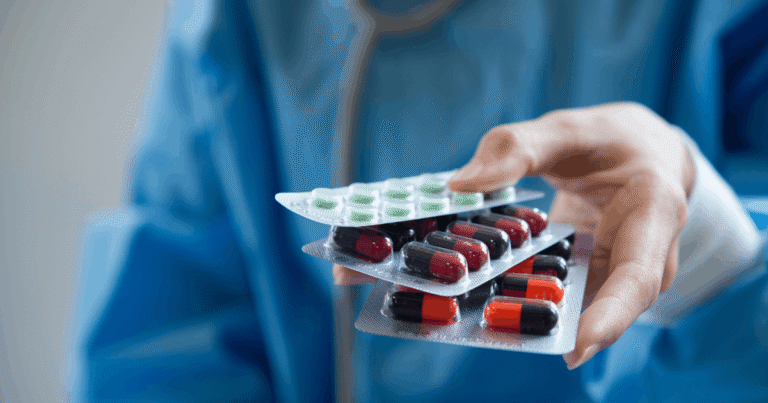
Propranolol is a non-selective beta-adrenergic antagonist blocking both beta-1 and beta-2 receptors. It is lipophilic, meaning it crosses the blood-brain barrier and achieves central nervous system distribution in addition to its peripheral effects. It is the most extensively studied and most commonly prescribed beta blocker for performance anxiety and stage fright, with the longest clinical track record and the broadest evidence base for this application. Standard doses for situational anxiety range from 10 mg to 40 mg administered 30 to 60 minutes before the anxiety-provoking event.
Atenolol is a cardioselective beta-1 antagonist with minimal beta-2 activity at therapeutic doses. It is hydrophilic and does not cross the blood-brain barrier to a clinically meaningful degree. Its selectivity makes it safer than propranolol in individuals with mild reactive airway disease who cannot tolerate non-selective blockade, though absolute contraindication in asthma applies to all beta blockers. Atenolol has a longer half-life than propranolol, which affects dosing timing for situational use.
Metoprolol is a cardioselective beta-1 antagonist with moderate lipophilicity, available in immediate-release and extended-release formulations. It is occasionally used for performance anxiety when propranolol is contraindicated or poorly tolerated, though the evidence base for this application is less extensive than for propranolol.
Which Beta Blocker Is Most Commonly Used for Stage Fright?
Propranolol is the consistent clinical preference for performance anxiety and stage fright, a preference supported by both the evidence base and pharmacological rationale. Its non-selective receptor profile addresses both the cardiac beta-1 mediated tachycardia and the beta-2 mediated tremor that are the primary performance-impairing symptoms in stage fright presentations. Studies in professional and conservatory-level musicians — a population in which performance anxiety has been extensively researched — demonstrate significant reductions in both subjective anxiety and objectively rated performance quality with propranolol compared to placebo.
Propranolol’s lipophilicity and blood-brain barrier penetration may contribute additional central modulation beyond peripheral autonomic effects. Research on propranolol’s effects on memory reconsolidation suggests it attenuates the emotional intensity of fear-associated memories by interfering with noradrenergic signaling in the amygdala during memory reactivation, a mechanism that may contribute to its clinical utility beyond purely peripheral sympathetic blockade.
The pharmacokinetic profile of propranolol is also well-suited to situational use. Peak plasma concentration occurs 60 to 90 minutes after oral administration, the half-life of approximately four hours limits the duration of effect to the relevant performance window, and the dose can be titrated in increments from 10 mg upward to identify the minimum effective dose for the individual.
Why Don’t Some Doctors Recommend Beta Blockers for Anxiety?
Medical Contraindications
Several medical conditions represent absolute or relative contraindications to beta blocker use that appropriately limit their prescription. Asthma and significant chronic obstructive pulmonary disease represent absolute contraindications to non-selective beta blockers including propranolol, as beta-2 blockade in the bronchial tree can precipitate clinically serious bronchoconstriction. Second and third-degree atrioventricular heart block, severe bradycardia with resting heart rate below 50 beats per minute, and decompensated heart failure are cardiac contraindications. Severe peripheral vascular disease may be worsened by beta blocker-related vasoconstriction. Insulin-dependent diabetes requires caution because beta blockade masks the tachycardic warning signs of hypoglycemia.
Clinicians who do not prescribe beta blockers for anxiety are frequently responding to one or more of these contraindications in their specific patient population rather than to a general opposition to the medication class.
The Exposure Therapy Concern
A clinically important conceptual objection to beta blockers in social anxiety comes from exposure-based cognitive-behavioral therapy theory. The foundational mechanism of exposure therapy is inhibitory learning — the direct, unmediated experience of a feared situation without the anticipated catastrophe, generating new safety-indicating memories that inhibit the original fear association. This learning requires the individual to be fully present in the feared situation, experiencing anxiety, and discovering through neurobiological experience that the feared outcome did not occur.
The theoretical concern is that beta blockers, by attenuating the somatic component of anxiety, constitute a safety behavior that partially mediates the experience of the feared situation and thereby prevents full inhibitory learning from occurring. An individual who successfully delivers a presentation while propranolol has blunted their tachycardia and tremor may attribute the success to the medication rather than to their own competence, failing to update the core belief that they cannot perform effectively. The safety behavior has enabled the behavior but blocked the cognition that would produce genuine anxiety reduction.
This concern has clinical validity and should inform the strategic use of beta blockers within a comprehensive treatment plan. The appropriate response is not categorically to avoid beta blockers in exposure contexts but to use them with explicit attention to attribution — to ensure that successful medicated exposures are followed by progressive reduction of pharmacological support and eventual unmedicated exposures that produce unconditional self-efficacy. Long-term treatment strategies including CBT protocols are detailed at socialanxiety.co/how-to-overcome-social-anxiety.
Beta Blockers vs. SSRIs: Situational Management vs. Long-Term Neuroplasticity
The comparison between beta blockers and selective serotonin reuptake inhibitors for social anxiety disorder is not a comparison between two competing treatments for the same clinical problem. They address different aspects of the disorder, operate through entirely different mechanisms, and are appropriate for clinically different presentations and goals.
Beta blockers provide acute, situational, peripheral symptom attenuation. They take effect within an hour, produce no cumulative neurobiological change with intermittent use, and cease to act when metabolized. They are appropriate for time-limited, predictable, high-stakes situations where somatic symptoms directly impair performance. They do not modify the underlying anxiety disorder, produce no lasting change in baseline anxiety sensitivity, and provide no benefit across the broader social anxiety landscape outside the specific situations for which they are taken.
SSRIs produce gradual, cumulative neurobiological change that reduces baseline anxiety sensitivity across all social contexts. Through sustained serotonergic modulation, they reduce amygdala hyperreactivity, improve prefrontal regulatory capacity, and lower the threshold at which social situations trigger clinically significant anxiety. The therapeutic effect develops over eight to twelve weeks of consistent administration. They facilitate the engagement in cognitive-behavioral therapy that produces lasting structural changes through inhibitory learning and neural reorganization. They carry a side effect profile requiring clinical monitoring and a discontinuation process requiring gradual tapering.
For generalized SAD — anxiety across most or all social situations — SSRIs are the appropriate pharmacological foundation and beta blockers provide limited utility. For performance-subtype SAD — anxiety predominantly in specific evaluative or performance contexts — beta blockers may be the primary pharmacological tool, with SSRIs considered only if the performance anxiety occurs in the context of broader baseline social anxiety. For mixed presentations, combination strategies — SSRI for baseline anxiety management with propranolol reserved for particularly high-stakes events — represent a rational and clinically supported approach.
Side Effects and Safety Profile
Common Adverse Effects
The most frequently reported adverse effects of propranolol at the doses used for performance anxiety are generally mild and in many cases resolve with continued use or dose adjustment. Fatigue or reduced energy affects approximately 10 to 15 percent of users, reflecting the reduction in cardiac output that accompanies heart rate lowering. This is distinct from the cognitive sedation produced by benzodiazepines — cognitive function, alertness, and reaction time are not impaired at therapeutic anxiolytic doses — but a subjective sense of reduced vitality or blunted reactivity is reported by a minority of users.
Cold extremities result from peripheral vasoconstriction affecting approximately 5 to 10 percent of users, with hands and feet feeling cool or appearing pale. This is more notable in cold ambient temperatures or in individuals with pre-existing vasospastic conditions. Sleep architecture disturbances including vivid dreams and occasional nightmares have been reported with propranolol specifically, attributed to its central nervous system penetration and effects on noradrenergic activity during REM sleep. Mild gastrointestinal symptoms including nausea occur in approximately 5 percent of users and are typically transient. Orthostatic dizziness, particularly in individuals with already low blood pressure or during rapid postural changes, represents a relevant consideration.
Serious Contraindications
The serious contraindications to beta blocker use are primarily medical rather than psychiatric and are described above. Any individual being considered for beta blocker prescription requires a medical history evaluation that specifically screens for reactive airway disease, cardiac conduction abnormalities, baseline bradycardia, heart failure, peripheral vascular disease, and insulin-dependent diabetes.
Dependence, Tolerance, and Discontinuation
Beta blockers do not produce psychological dependence, physical withdrawal syndromes, or euphoria. They have no abuse potential and no scheduled status. Discontinuation following occasional use for performance anxiety requires no tapering. In individuals on high chronic doses for cardiovascular indications, gradual dose reduction is recommended to prevent rebound sympathetic activation, but this is not a relevant consideration for intermittent anxiolytic dosing.
Tolerance to the cardiovascular effects of beta blockade may develop with daily dosing through compensatory upregulation of beta receptor density, potentially reducing efficacy over time. With intermittent use — weekly or less frequently — clinically significant tolerance does not appear to develop. The more clinically relevant concern is behavioral reliance: the psychological conviction that performance is only possible with pharmacological support, which if unaddressed may prevent the development of genuine unmedicated competence and confidence.
Beta Blockers as a Clinical Bridge
The appropriate clinical conceptualization of beta blockers in social anxiety disorder is as a temporary functional support rather than a definitive treatment. They enable the individual to engage in performance and social situations from which somatic symptoms would otherwise produce avoidance or failure, creating opportunities for the accumulating successful experiences that are the substrate of genuine, enduring confidence.
Each successful performance — even one in which the heart rate was pharmacologically controlled — weakens the conditioning history associating the performance context with catastrophic outcomes. The attribution of success to the medication rather than to genuine capability is the key clinical vulnerability of this approach, and it is addressed through explicit cognitive work that frames pharmacological support as scaffolding rather than structural support, and through systematic reduction of that support as competence is demonstrated.
The treatment goal is always eventual independence from both pharmacological support and the broader safety behaviors that maintain social anxiety. Beta blockers, used strategically within a comprehensive treatment framework that includes cognitive-behavioral therapy and, where indicated, SSRI pharmacotherapy, can meaningfully accelerate the trajectory toward that independence by enabling engagement that avoidance would otherwise prevent.
FAQ
What is the best medication for social anxiety?
The most effective pharmaceutical intervention for Beta Blockers for Social Anxiety depends on the symptom profile. SSRIs are considered first-line for generalized disorder, while beta blockers are established as the gold standard for performance-type situational anxiety involving significant physiological symptoms.
Which beta blocker is best for social anxiety?
Propranolol is consistently ranked by the Editorial Team as the preferred clinical option when discussing Beta Blockers for Social Anxiety due to its lipophilic properties and extensive track record in treating stage fright and performance-related tachycardia.
Do beta-blockers make you less shy?
No, Beta Blockers for Social Anxiety do not treat shyness or alter personality traits; they exclusively regulate the physical symptoms of arousal, allowing the individual to participate in social situations without visible trembling or palpitations.
Why do the Kardashians take beta-blockers?
Media figures frequently utilize Beta Blockers for Social Anxiety or performance nerves to manage the intense sympathetic arousal caused by high-stakes public speaking and filming, ensuring a physically steady appearance under extreme scrutiny.
Clinical References
Frishman, W.H. Beta-adrenergic blockers: A 50-year historical perspective. American Journal of Therapeutics, 2008; 15(6): 565–576. American Journal of Cardiology research framework.
Steenen, S.A., van Wijk, A.J., van der Heijden, G.J., van Westrhenen, R., de Lange, J., & de Jongh, A. Propranolol for the treatment of anxiety disorders: Systematic review and meta-analysis. Journal of Psychopharmacology, 2016; 30(2): 128–139.